A wet-weather mudroom needs a clear place for damp items before they reach dry storage. Plan the route from the door to the boot tray, coat hooks and bench, then choose surfaces and care routines suited to the materials in your design.
Watch the first minute inside the door
Think about arriving with an umbrella, shopping bags and wet shoes. You need somewhere to set things down before opening a cabinet or hanging a coat. A layout that works on a dry day may become awkward when several people enter at once.
Rehearse that arrival without bringing water inside. Carry the bags you normally use and see where you naturally stop. Note whether the door hits a bench, whether someone blocks the path while removing boots and where a child would put a backpack. These details establish the order of storage along the wall.
Separate the damp landing area from dry storage
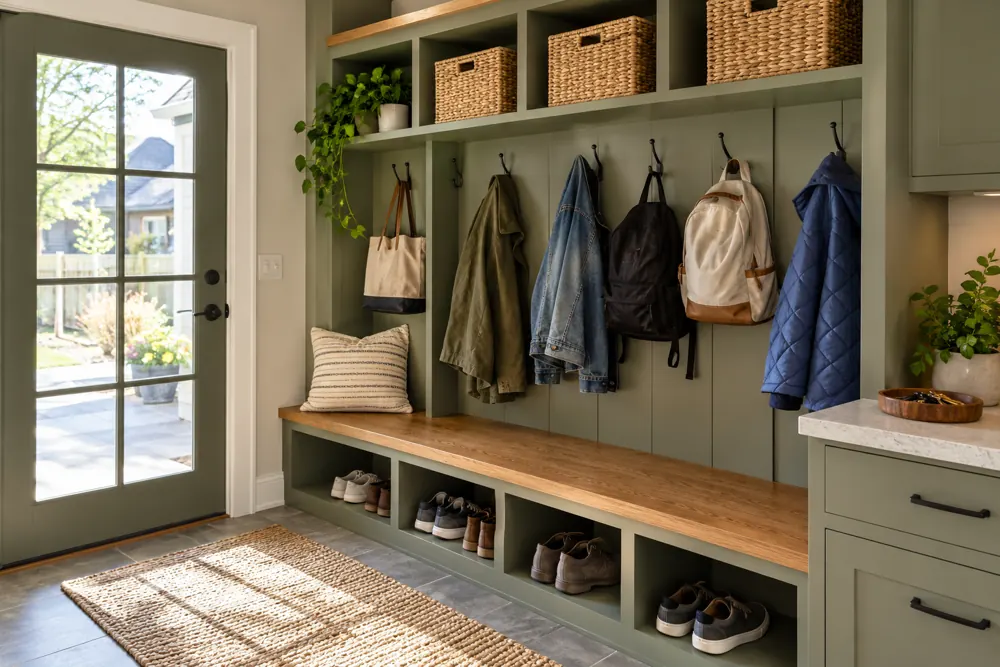
A removable boot tray can establish a clear place for wet footwear. Size the area around the boots actually used by your household and consider how the tray will be removed and cleaned. Follow the flooring and storage manufacturers’ instructions for moisture exposure and care.
Dry gloves, spare shoes and folded scarves need their own section. Avoid putting them directly under dripping coats if water could reach them. Closed cabinets can keep dry items together, while the daily landing area remains easy to inspect and wipe down.
Give coats room to hang
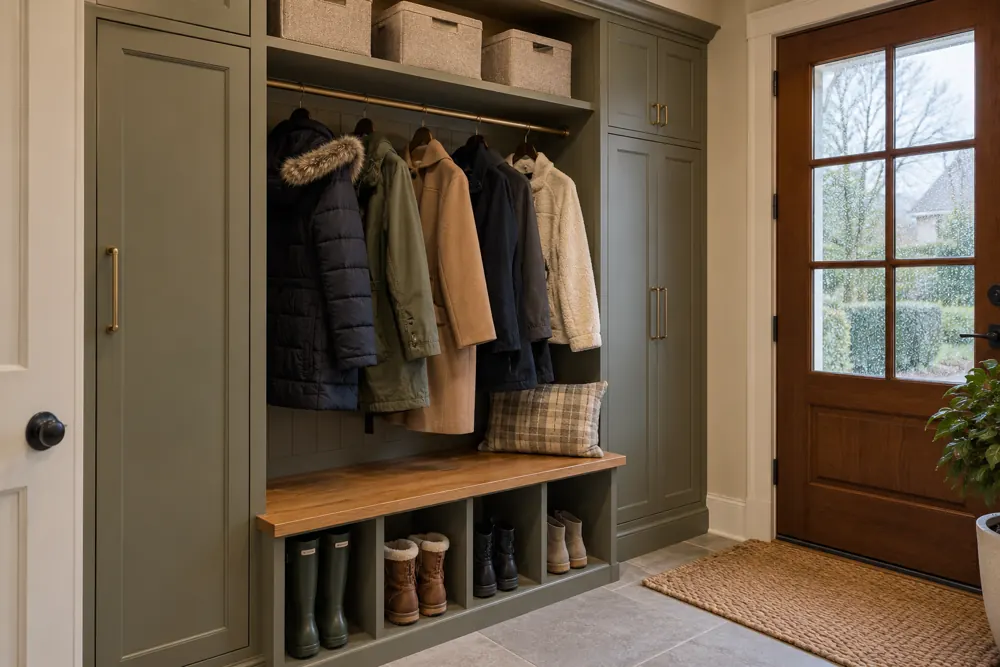
Hooks become crowded quickly when each one carries several heavy coats. Count the outerwear in current use and decide which pieces can go in a separate coat closet. Allow practical space for sleeves, bags and the movement needed to hang a coat without knocking another one off.
Check the selected hooks and their installation requirements for the intended load. A decorative hook may not suit a heavy bag. Let damp items dry according to their care instructions before putting them into enclosed storage, and discuss the room’s ventilation if dampness is a recurring concern.
Plan a small place for items that arrive unexpectedly, such as a visitor’s coat or an extra shopping bag. It can be a clear hook or a short open section. Keeping a little flexibility in the arrangement prevents the ordinary wet-weather routine from filling every available surface before anyone else comes home.
- List the coats used during the busiest week.
- Keep spare outerwear separate from current daily pieces.
- Include the umbrella and dog-walking supplies in the arrival plan.
Keep a usable place to sit
A bench is most helpful when it stays available for taking shoes on and off. If it becomes the only landing surface for parcels and bags, its intended function disappears. A separate shelf or designated counter section can prevent that conflict.
Look at the floor in front of the seat as part of the design. A person sitting down needs a comfortable place for their feet and a way to stand without stepping around loose footwear. Keep the route to the next room clear while someone is using the bench.
Keep the door hardware in view
A long coat or hanging bag can extend into the path of a door handle. Include the full hanging length and the room’s door swing when placing hooks. Check the same condition with the coat occupied and the bench in use, since the entry may feel very different from an empty room during measurement.
Build cleanup into the storage plan
Wet-weather storage needs a routine as much as it needs cabinets. Decide where cloths and cleaning supplies will live, how the boot tray reaches a place to be cleaned and where dry shoes return afterward. Follow the care directions for each finish rather than assuming a storage surface is waterproof.
Photograph the entry on an ordinary busy day before your consultation. Include the outside door, the path into the home and the items that accumulate there. FG can discuss hooks, bench storage, cubbies and cabinets around that route. Explain which area gets damp so material and installation details can be reviewed for the conditions you actually have.
Keep planning
Discuss this layout for your home.
Bring a photo of your everyday entry route and a list of the wet-weather items your household brings inside.
FG Home and Closets designs and installs storage throughout Chicagoland from its Aurora base. Share your room, priorities and ZIP code to start a free design consultation.
Explore mudrooms & entryways