Give the bench a clear everyday role
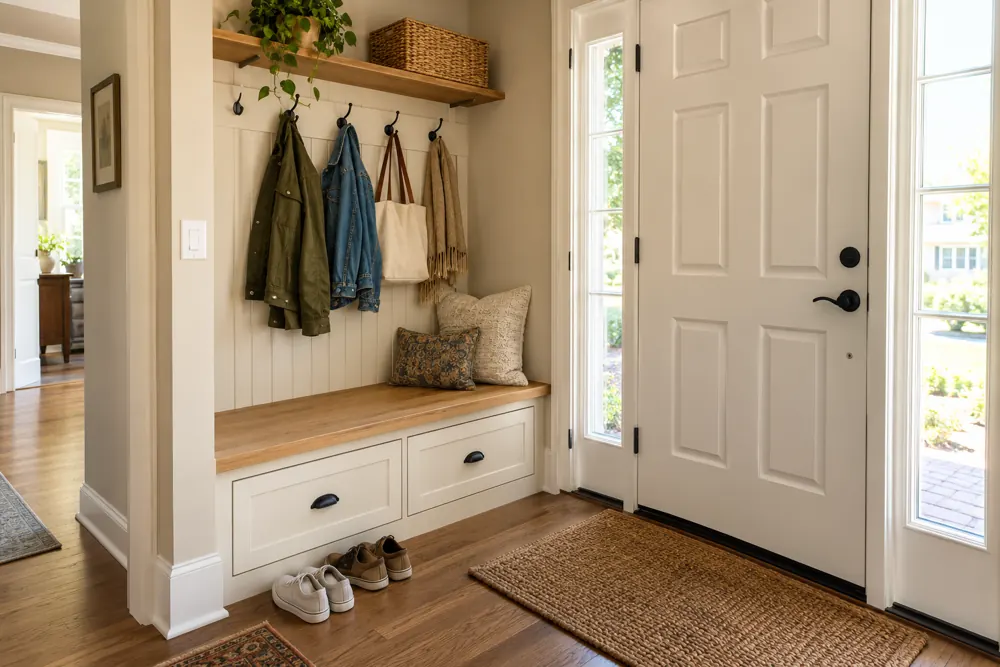
An entryway bench earns its space when it makes a recurring task easier. That may be changing shoes, setting down a bag or keeping a few frequently used items near the door. Start with the task rather than simply deciding that an empty wall needs built-in furniture.
Watch the route people take through the entrance. A useful bench should sit where someone naturally pauses without making it difficult for others to pass. The storage underneath can add value, but the seat and the circulation around it need to work before drawers or cubbies are added.
Choose storage for the items that arrive there
Shoes, bags and accessories have different shapes and different put-away routines. Open cubbies can make some items easy to retrieve, while drawers or cabinet doors may suit categories you prefer to contain. The right arrangement depends on what the bench will actually hold.
Avoid assuming that every pair of shoes in the house belongs at the entrance. Keeping the daily selection nearby and other footwear elsewhere can make a small bench more useful. Discuss the larger or awkward items early so the proposed storage does not leave them on the floor beside the cabinetry.
Check the surrounding room carefully
Door swing, nearby furniture, windows, vents and other features may affect where a bench can go. A window area should be reviewed for suitability rather than treated as an automatic bench location. The selected design needs to preserve the access and operation the room requires.
The intended use also helps guide the proportions. A bench for briefly changing shoes is not necessarily the same as a seat intended for reading or gathering around a table. Talk through how it will be used, the storage access needed and how the finish should relate to the rest of the home.
Remember to include the entrance on its busiest day, when several people may need to use the same seat, hooks and storage at once.
Test an arrival with your hands full
A simple walk-through can reveal whether the layout supports the entrance routine or adds another obstacle. Think about where the bag, jacket and shoes go in sequence.
- Choose the main purpose of the seat.
- List the belongings that need storage underneath.
- Check open doors and the walking route.
- Confirm access to windows, vents and other nearby room features.
Make it work in your home.
FG Home and Closets designs and installs storage from Aurora, Illinois. Share your room, priorities and ZIP code to start a free design consultation.
Explore window & bench seating Explore mudrooms & entryways