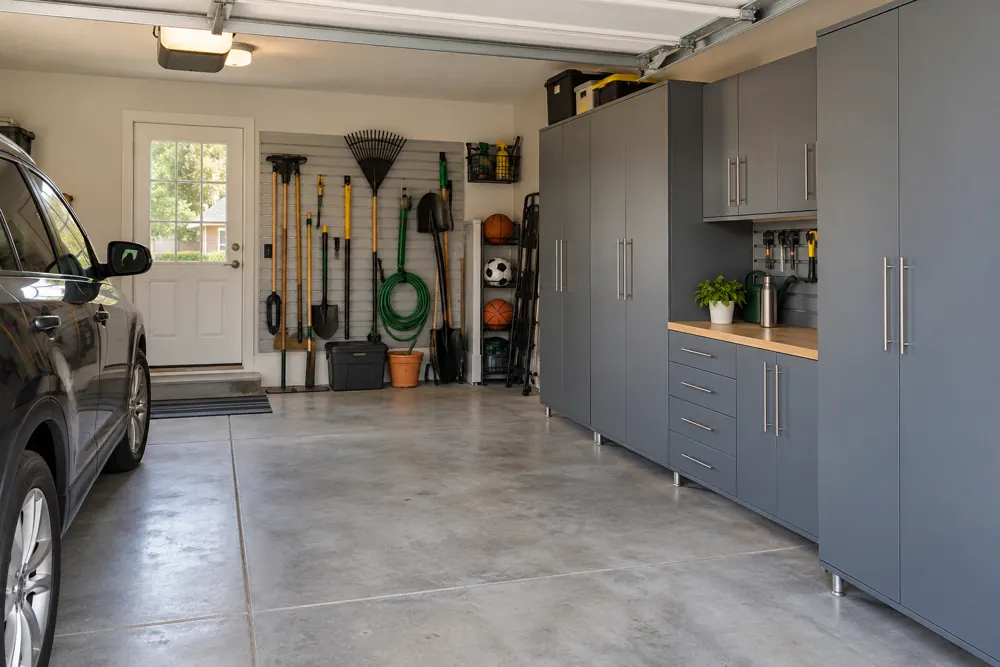
Garage sports storage should fit the shape of the equipment and the route used to take it out. Measure bikes, full bags and long items, then plan their locations with the vehicle parked and the doors open.
Group equipment by the trip it takes
A sports bag, footwear and a ball may leave the house together even though they have very different shapes. Group them by activity first. This reveals which pieces should be close together and which seasonal items can occupy less convenient storage.
Ask each person to show how they pack for practice or a ride. A storage system becomes harder to maintain when it requires several trips across the garage to collect one activity’s gear. Keep the frequently used set together where it can be gathered without walking behind or squeezing past the car.
Measure equipment in its stored condition
A full equipment bag is often wider than an empty one. Bicycle handlebars and pedals may project beyond the frame. Measure the objects as they will be stored and include any motion needed to turn, lift or remove them.
For long equipment, consider both height and the angle at which it leaves its compartment. An item can fit vertically yet be awkward to take out under a garage-door track. Show the designer the actual equipment where possible so the plan addresses those projections and movements.
Choose a lifting task you can repeat
Wall storage can clear floor space, but only if the person using it can put the item away comfortably. A bike stored high on the wall may be impractical for someone who cannot readily lift and position it. Compare the lifting motion with a lower storage position.
Ask about the load rating and attachment requirements of every proposed rack, hook and shelf. The right solution depends on the equipment weight, chosen hardware and wall conditions. Do not assume that a general-purpose hook is suitable for a bicycle or a heavy loaded bag.
Label shared bins by the activity that uses them, especially when similar bags belong to different people. Consider whether a person can identify and remove their own set without pulling down someone else’s equipment. A clear assignment can help a practical cabinet layout remain useful after the initial organizing session is over.
- Confirm the weight of large or heavy equipment.
- Allow room to approach the rack with the item in hand.
- Keep track movement and other garage equipment clear.
Keep the return route simple
After a wet game or muddy ride, equipment may need cleaning or drying before it returns to a cabinet. Plan a temporary landing area that does not block the door into the house. Follow the equipment makers’ instructions for cleaning, drying and storage.
Small pieces need visible homes, too. A dedicated bin or drawer for pumps, lights and repair items can prevent them from disappearing under bulky bags. Use compartments sized to your own collection rather than filling a wall with storage before deciding what belongs there.
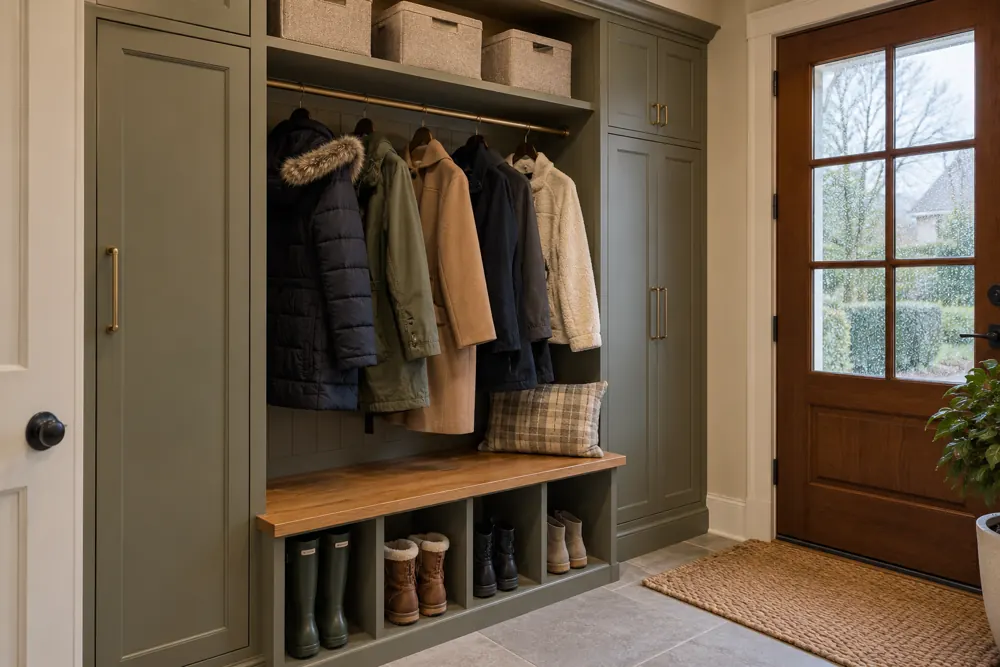
Give small essentials a clear departure check
A small shelf or labeled container near the main gear can help collect keys, lights or other small essentials before leaving. Keep it separate from loose tools and unrelated household items. The aim is to see the missing item quickly when gathering equipment, without turning the whole cabinet into a miscellaneous catchall.
Test the plan with the car in place
Park as you normally do and open the vehicle doors and tailgate. Carry a full bag between the proposed storage wall and the car. Check whether someone can still reach the inside door while another person is getting equipment.
A garage has several fixed conditions that affect cabinetry, including steps, outlets, door hardware and existing equipment. Take wide photographs of those conditions as well as close-ups of your gear. FG can help plan cabinets and storage around the usable space, with selected hardware and load limits discussed during design. A successful plan makes it easy to leave for an activity and put everything back when you return.
Keep planning
- Before choosing garage cabinets, plan the clear space
- A practical seasonal storage reset for Chicagoland homes
Discuss this layout for your home.
Share a garage photo taken with your vehicle parked, plus the dimensions of your largest bike or full equipment bag.
FG Home and Closets designs and installs storage throughout Chicagoland from its Aurora base. Share your room, priorities and ZIP code to start a free design consultation.
Explore garage storage