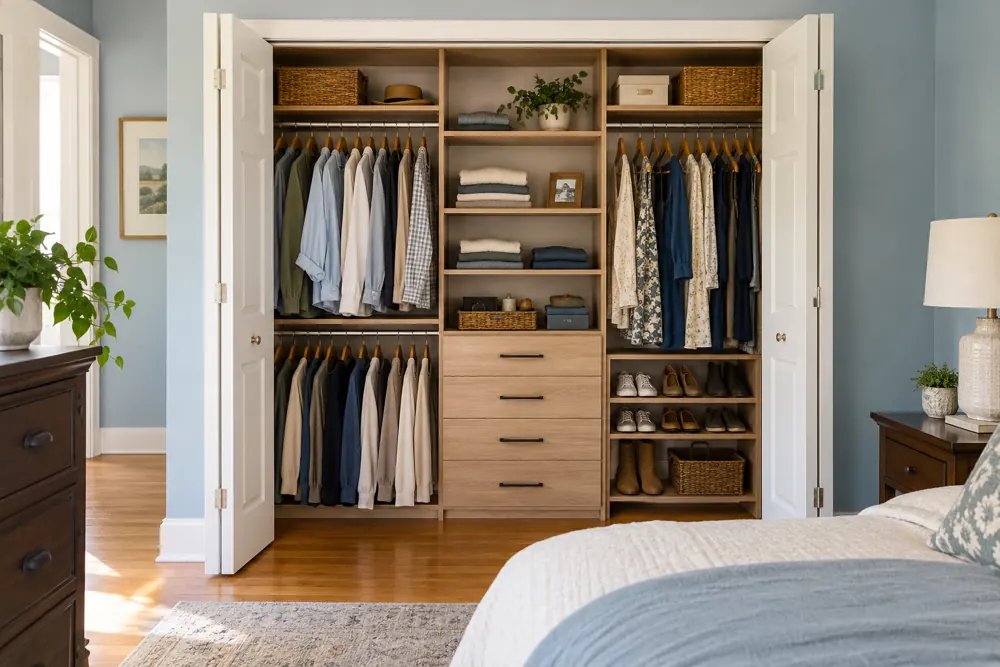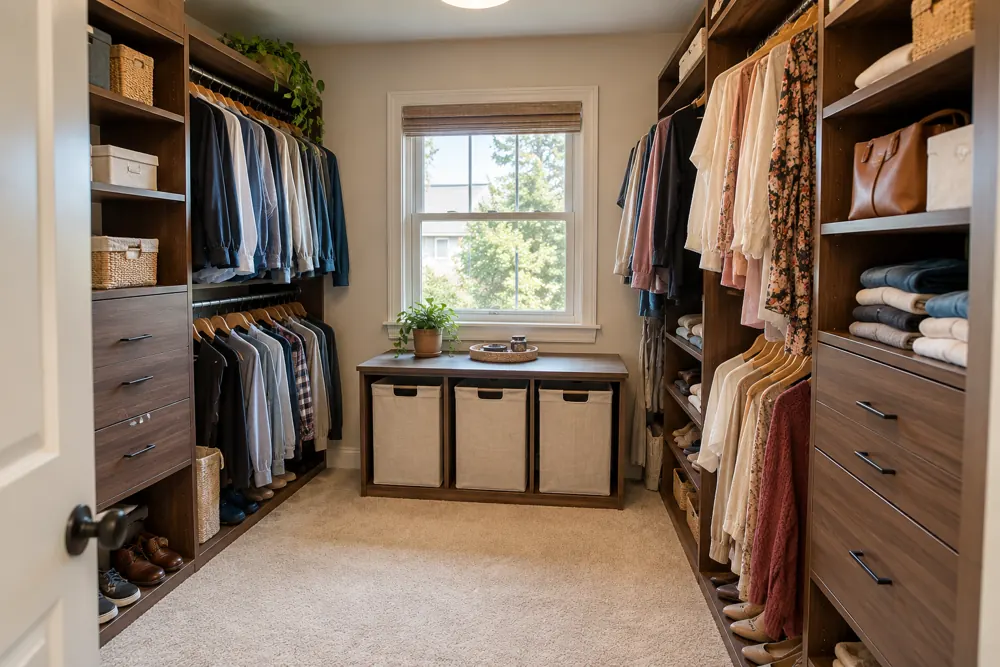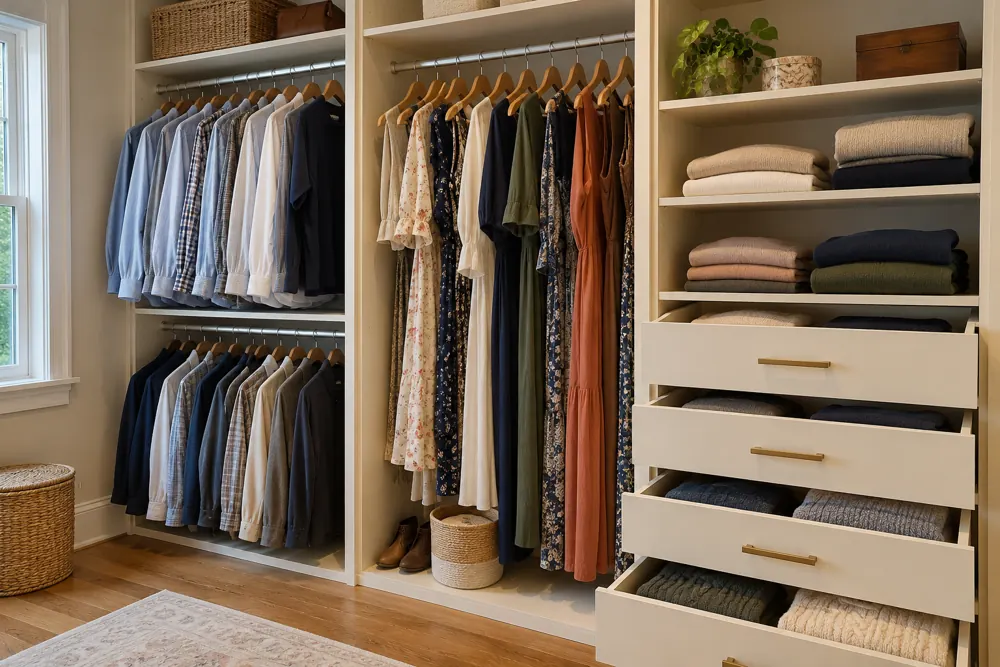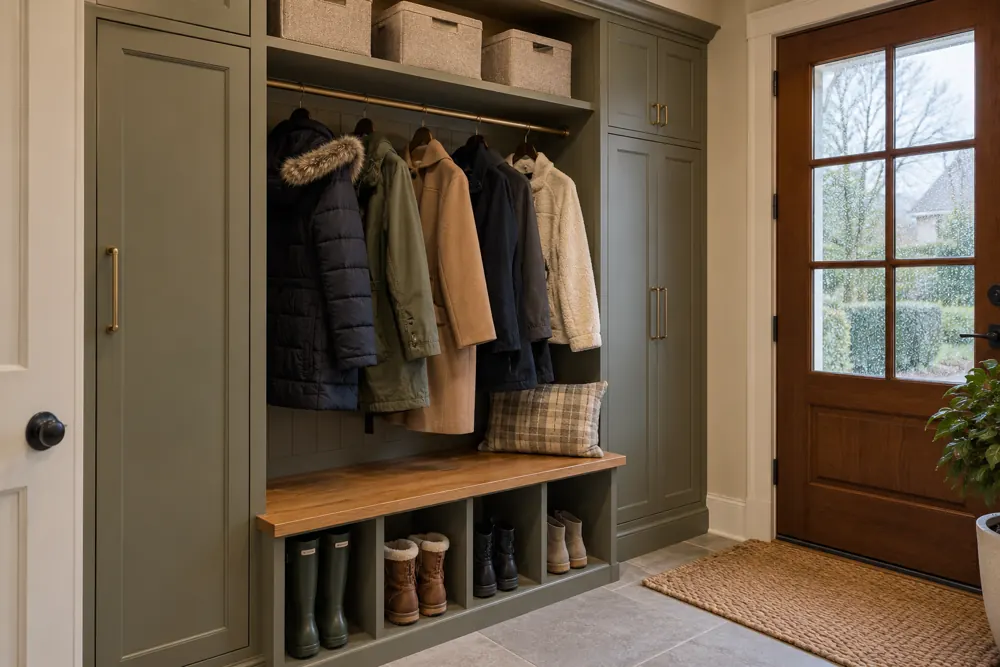
Upper closet shelves are usually most useful for things you need occasionally. Daily clothing, shoes and bags should have a place you can reach comfortably during your normal routine. Before adding a high shelf, decide what it will hold, how you will identify the contents and how you will retrieve them. Extra shelf space earns its place when the items remain practical to put away and bring down.
Sort by frequency before you sort by category
A shelf plan based only on item type can put all bags together even when one is used every day and another comes out twice a year. Begin by separating daily, weekly and occasional items. That distinction often matters more than matching identical containers across the top of a closet.
For instance, the tote you carry to work belongs on an accessible hook or shelf. A spare travel bag may suit an upper compartment. Keep the categories simple enough that another person in the household can understand where an item should return after use.
Measure the container with its lid and handles
A storage bin needs more room than its base dimensions suggest. Include its lid, any projecting handles and the space needed to get your hands around it. A container that fits on a shelf can still be awkward to slide past the rail or lift over a shelf edge.
Bring the actual bin or its complete measurements to the design conversation. If you have not bought containers yet, wait until the shelf layout is settled. Buying a matching set first can force the cabinetry to serve the bins instead of the clothing and supplies you need to store.
Choose contents that are straightforward to retrieve
Upper storage should not become the default destination for the heaviest or most awkward item simply because it is rarely used. Think about the full movement from shelf to floor and back again. A bulky item can be troublesome even when it is light, especially if it catches on the garments below.
Consider dividing occasional items into smaller groupings that make sense on their own. Spare scarves in one container may be easier to manage than a mixed box of scarves, shoes and keepsakes. The useful choice depends on your reach, the room and the objects themselves.
Make the contents recognizable from below
A label on top of a lid is invisible when the bin is overhead. Put the identifying information on the face that points into the room. Use a specific description you will remember later, such as guest blankets or winter accessories, rather than a vague label that invites a new pile of unrelated things.
Open shelves can also reveal the item itself. A clearly visible travel bag may need no container at all. Leave enough separation between groupings to recognize what belongs where, so putting something away does not require rearranging the whole shelf.
Plan the retrieval step as part of the room
If an item requires a step aid, consider where that aid is stored and whether the floor below stays clear. Follow the equipment instructions and use support appropriate to your circumstances. Closet rails, drawers and shelves should never be treated as climbing steps. If accessing a shelf feels awkward, a lower storage position may be the better answer.
- Keep the path below upper storage clear of loose shoes and baskets.
- Choose a storage level that suits the person retrieving the item.
- Discuss difficult reach conditions before approving the layout.
Leave room for future changes in routine
What you use occasionally this year may become part of a daily routine later. A hobby bag, work uniform or sports kit can move between categories. When considering a new system, ask which shelves or rails in that proposed design can be adjusted, and which parts would remain fixed.
A useful upper shelf does not need to be full from the start. Some breathing room can make an occasional storage area easier to use. FG Home and Closets can help you discuss the relationship between upper storage, the rail beneath it and the items that deserve the most accessible part of your closet.
Keep planning
- A practical seasonal storage reset for Chicagoland homes
- The closet inventory that makes design easier
Discuss this layout for your home.
For a free consultation, show FG the items you want to keep above the hanging space and describe who will use them. We can discuss a layout that puts daily essentials and occasional storage in appropriate places.
FG Home and Closets designs and installs storage throughout Chicagoland from its Aurora base. Share your room, priorities and ZIP code to start a free design consultation.
Explore custom closets Explore linen & hall closets