A drawer should fit the clothing you plan to put inside it, with enough room to see and remove pieces without unpacking the contents. Measure your normal folded stacks first, then compare them with the proposed drawer’s usable interior. The outside cabinet width and the size of the drawer front do not tell you everything about the space available for clothing.
Fold the clothing the way you will keep it
Start with a few representative items rather than the smallest shirt in the drawer. Fold a sweatshirt, a pair of jeans and your everyday T-shirts using the method you actually prefer. A layout that depends on a completely different folding habit may be difficult to maintain when the laundry comes back each week.
Lay the groups on a table and measure their width, depth and height. Photograph them beside a ruler if you want a quick reference for your consultation. Record the number of pieces in a normal stack so the measurement has a useful meaning later.
Ask about usable interior dimensions
The drawer box takes up part of the cabinet opening. Its sides, back and hardware affect the space inside, while the drawer front can be larger than the box behind it. Compare the planned clothing group with the interior dimensions shown for the proposed product, rather than assuming a wide front means an equally wide storage area.
The same check matters when using dividers. A tray or insert may reduce the available width or depth. If you already own an organizer you want to keep, include its outer measurements and show how it sits inside the current drawer.
Choose a depth that keeps the contents visible
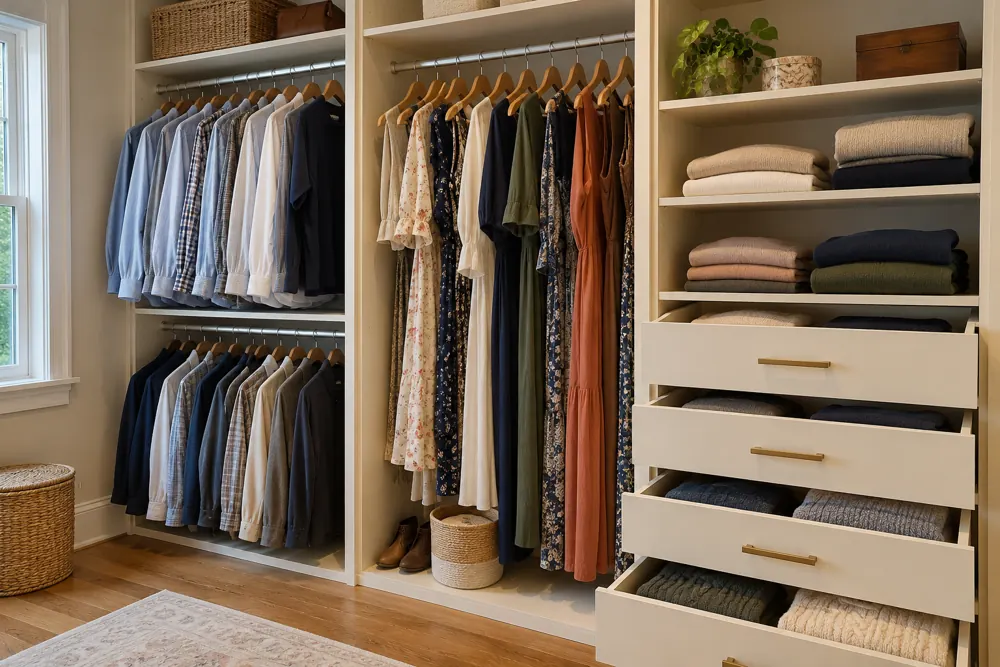
A deep drawer can suit bulky knitwear, but extra height may encourage piles that hide the lower pieces. Shallower drawers can make smaller garments easier to scan. Think about how many layers you want to lift before reaching the item at the bottom, and whether you prefer stacks or rows of folded clothing.
Try the arrangement in a box or an existing drawer before committing. Put several days of clothing into the test space and use it normally. Notice whether the group remains orderly when a few pieces are removed. That experience is more informative than a neatly packed display.
Separate categories when mixing creates searching
A single large drawer can accommodate several clothing types, but it needs a clear internal arrangement. Socks, workout clothing and scarves can spread into one another when there is no boundary. Decide whether separate drawers or a few appropriately sized dividers would make putting things away simpler.
Keep the number of compartments tied to actual categories. Tiny divisions can create wasted space if the garments do not fit them. A drawer for everyday shirts might need no insert, while one for smaller accessories could benefit from a few larger sections that are easy to recognize.
Check the drawer with the room and doors
The usable interior is only part of the decision. You also need space to open the drawer fully, stand in front of it and reach the back. Sliding closet doors, a nearby hamper or another drawer bank can interrupt that movement. Check the proposed drawer position with the doors in their normal open position.
- Confirm the interior width, depth and usable height.
- Compare the largest normal folded item with that space.
- Check the drawer’s full opening path in the room.
Build the drawer count from your wardrobe
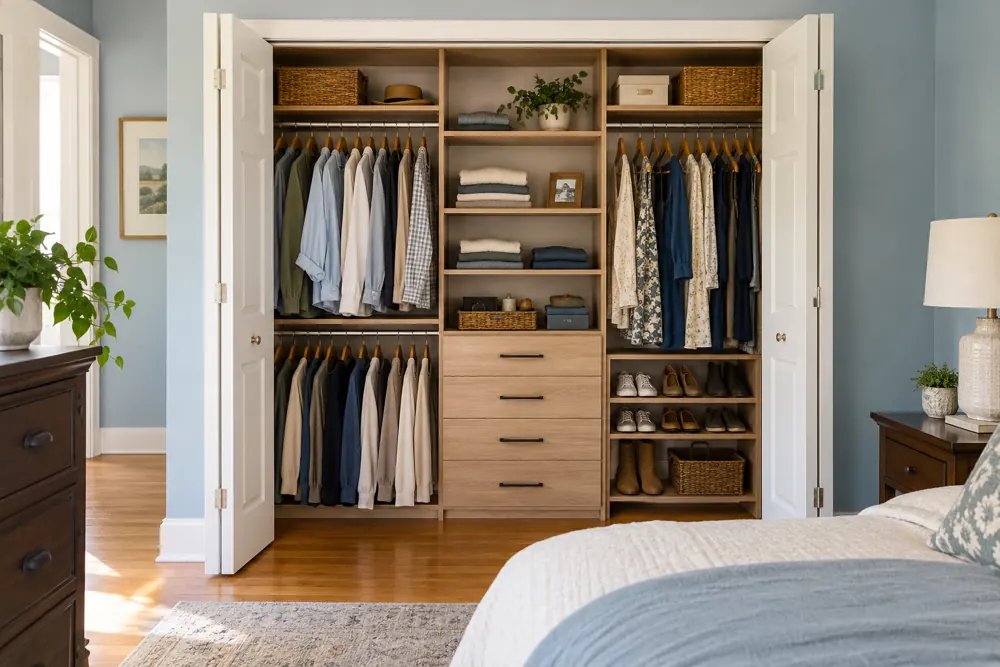
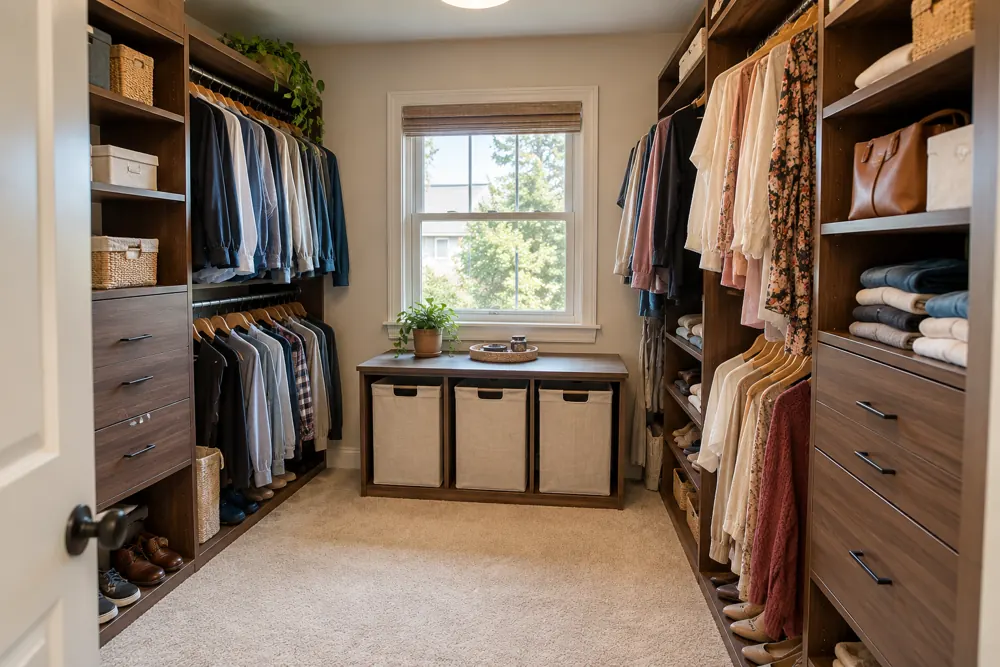
More drawers are not automatically better. Each drawer section takes wall space that could serve hanging clothing or open shelves. List the groups that genuinely work better in drawers, then decide which items can stay on shelves or rails. The balance should reflect your wardrobe rather than a symmetrical picture.
For a shared closet, make this list separately for each person. One side may need several smaller drawers while the other needs more hanging space. FG Home and Closets can discuss drawer sizing as part of a complete closet plan, with the layout, product choices and price reviewed together before you approve the project.
Keep planning
Discuss this layout for your home.
Bring a few folded-item measurements and a list of drawer categories to your free FG consultation. We can discuss the usable storage you need and where the drawer section will work within the rest of your closet.
FG Home and Closets designs and installs storage throughout Chicagoland from its Aurora base. Share your room, priorities and ZIP code to start a free design consultation.
Explore custom closets Explore walk-in closets