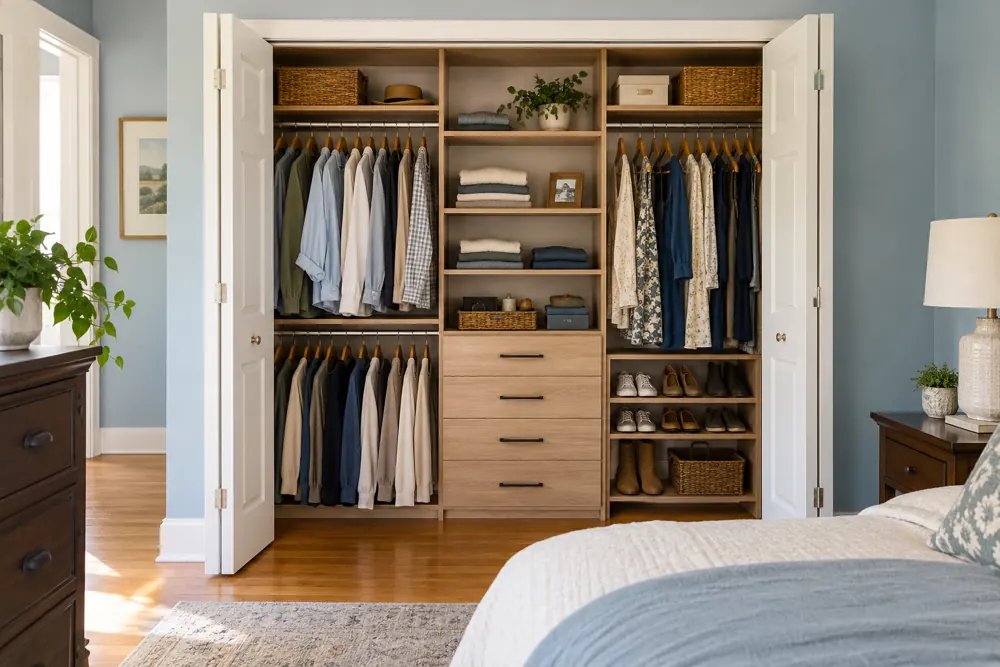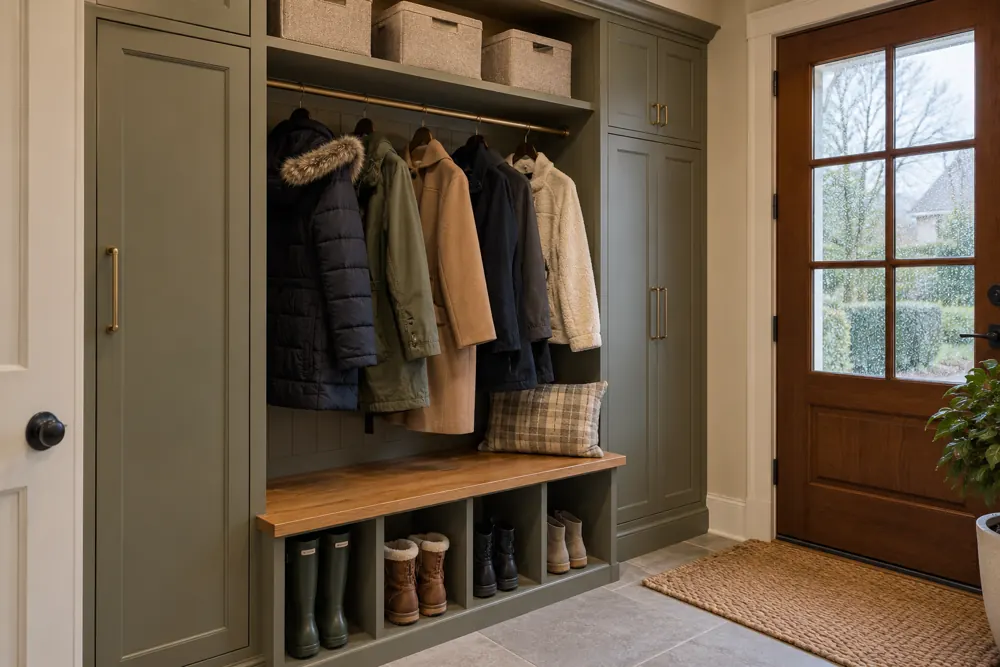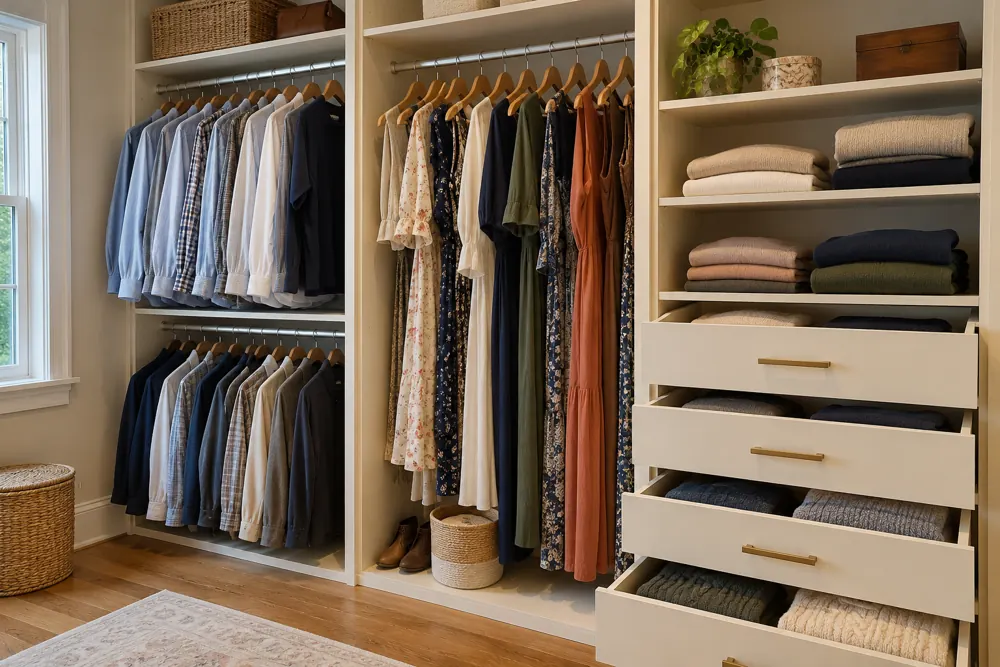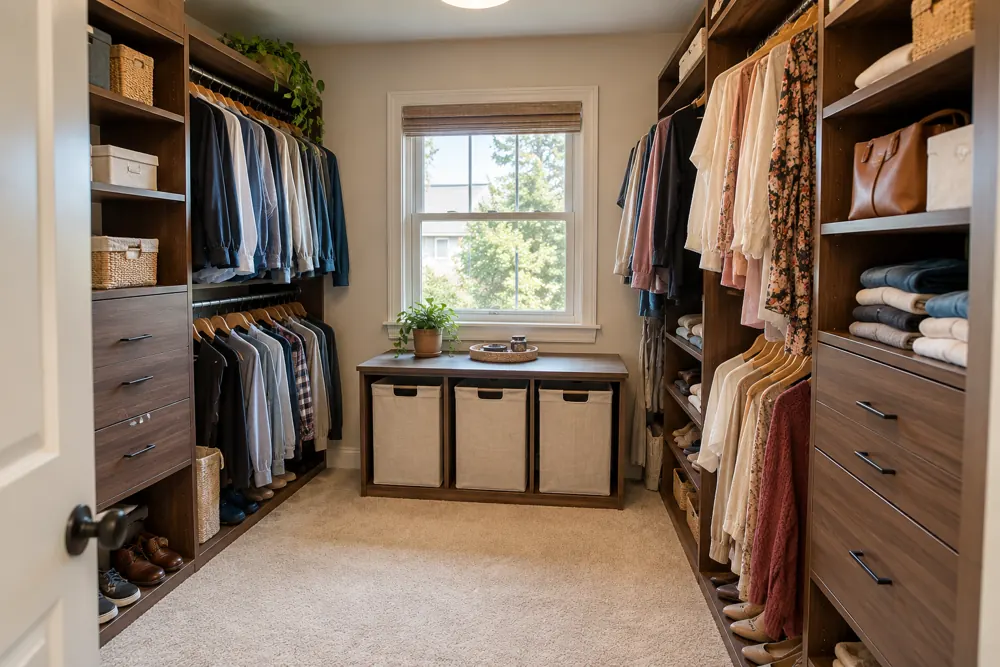
A closet corner works best when you decide which wall has priority. Two full-depth storage runs can compete for the same space, leaving garments or shelves hidden behind one another. Start with the items you reach for most, give them a clear approach and let the corner serve a specific job. Filling every inch is less useful than being able to find and remove what you own.
Look at the corner from the doorway
Stand where you normally enter and identify what you can see without stepping around anything. A corner that is obvious from the door may suit a visible shelf. A corner behind a hanging section may be better for occasional storage. The same room can have two corners that call for different treatments because the approach is different.
Take a photo with clothes on the rails. An empty closet makes it easy to underestimate how much space sleeves and shoulders occupy. Existing garments also reveal where the corner is already working and where items are disappearing behind other items.
Let one hanging run take the lead
When hanging rails meet at a right angle, clothing on one run can obscure the end of the other. Decide which group of garments needs the straightforward reach. Daily shirts might take the uninterrupted wall, with less-used coats farther into the return. A clear division keeps the wardrobe understandable.
Count garments by how often you wear them, then test the arrangement with actual hangers. If getting to a jacket means shifting a row of shirts every time, the corner is doing too much. Discuss ending one run earlier or moving a section to another wall.
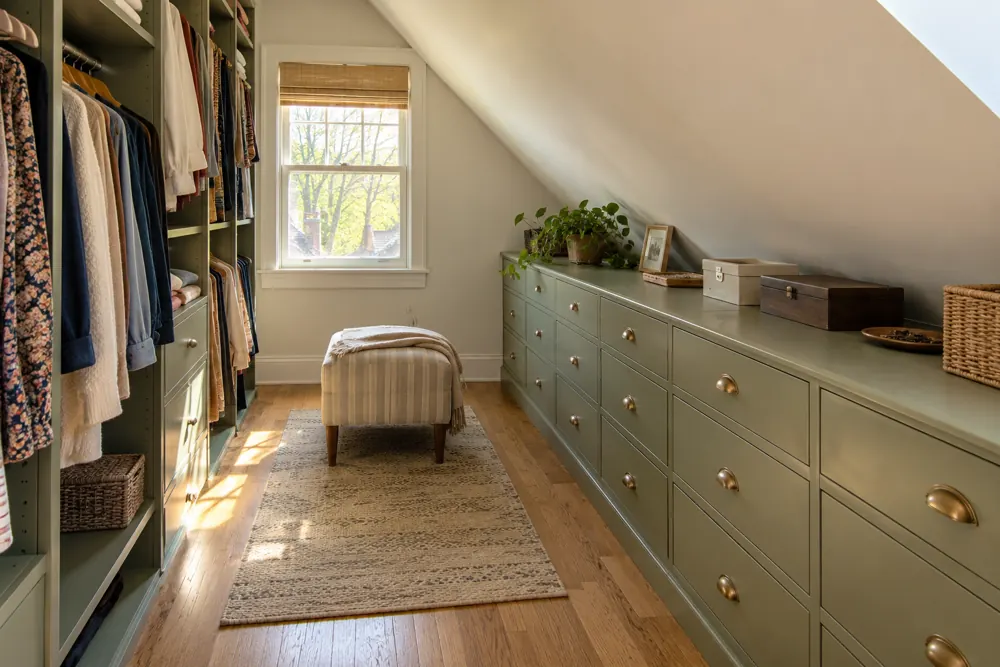
Choose shelves for items you can lift out
Corner shelves can hold folded clothing, bags or bins, but the usable part is the part you can reach. A very deep shelf can become a parking place for forgotten items. Consider the size of the container, where its handle sits and whether you can lift it clear without brushing hanging clothes.
For example, an occasional-use bag on an open corner shelf may be easier to manage than a stack of everyday shirts behind another stack. Keep the item grouping simple enough to recognize at a glance. Labels help a bin, but they do not fix an inaccessible shelf.
Keep drawers away from competing movements
A drawer needs room in front of it, and a corner can interrupt that path. Look at the drawer fully extended alongside the adjacent storage. Handles, garment edges and a nearby cabinet door all affect the movement. Do the check at floor level as well as at waist height.
A useful design drawing should make these relationships clear. Ask to see where you would stand to open the drawer and remove its contents. If you must step into the hanging section or close another drawer first, consider whether a different position would make the routine easier.
Give the least convenient area a limited role
Not every corner needs to hold daily clothing. An out-of-season tote or a spare bag may earn a place there if it remains removable. Put a limit on what the corner is expected to do, rather than making it absorb everything left over after the main walls are planned.
- Keep frequently worn clothing on the clearest approach.
- Use one visible grouping for occasional items.
- Check that a bin can be removed without unloading a shelf beside it.
Test the whole route through the closet
A corner decision affects the center of the room. A deeper return can reduce the space for turning, reaching or opening a drawer elsewhere. Mark the proposed storage edges on the floor with removable tape and walk the route you would use while getting dressed. Include another person if you share the room.
FG Home and Closets can discuss corner options as part of a walk-in or fitted closet design. Bring a photo from the doorway, a list of the clothing you use daily and an example of the largest bin you want to keep. Those details help turn an awkward intersection into a deliberate part of the plan.
Keep planning
Discuss this layout for your home.
Share the corner that is giving you trouble during a free FG design consultation. A photo with clothing in place will help us discuss visibility, reach and the storage you need on each wall.
FG Home and Closets designs and installs storage throughout Chicagoland from its Aurora base. Share your room, priorities and ZIP code to start a free design consultation.
Explore walk-in closets Explore custom closets