Start with the room that changes the day
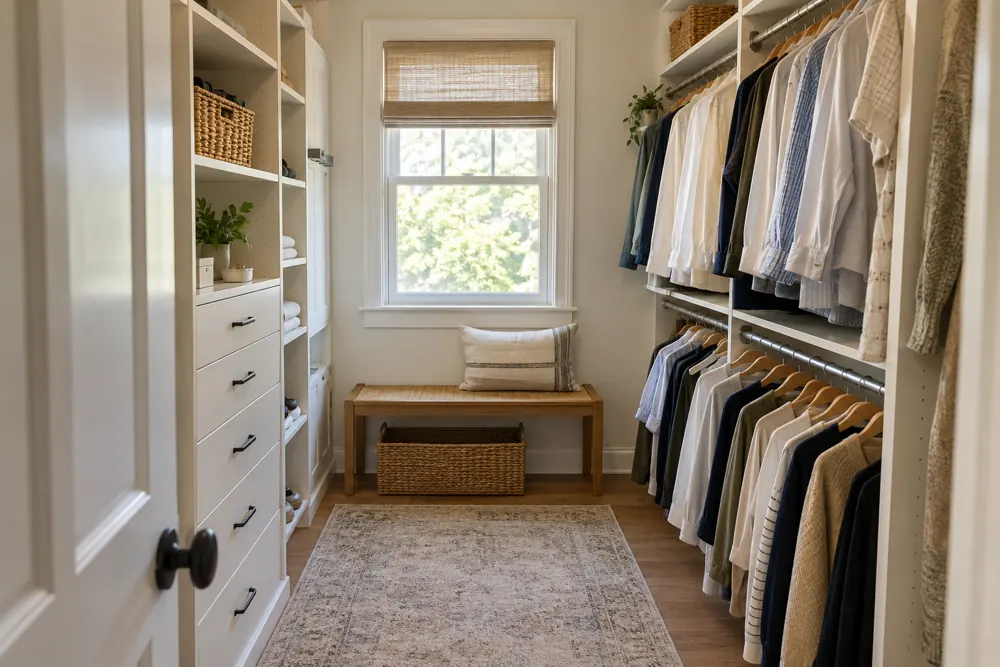
Whole-home organization does not require redesigning every room at once. Begin with the space that causes the most repeated frustration. A closet that slows every morning or a pantry that makes groceries difficult to put away may be a more useful first phase than a room used only occasionally.
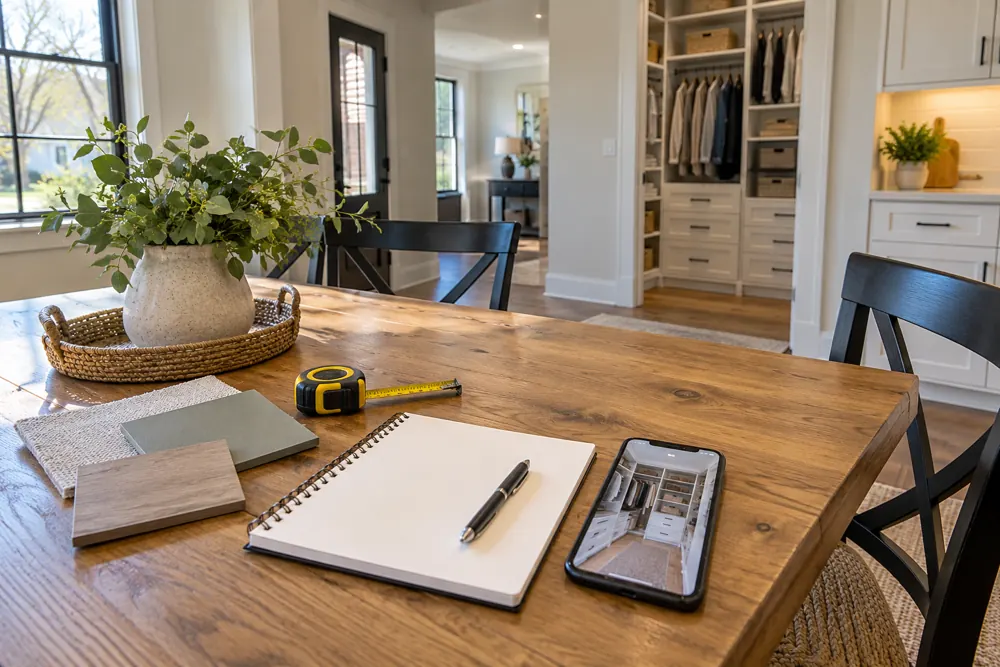
Write down the tasks you want to improve and the belongings involved. This helps distinguish a storage problem from a category that simply needs a different home. The first phase should solve a clear issue rather than become a small version of every possible project in the house.
Notice the connections between rooms
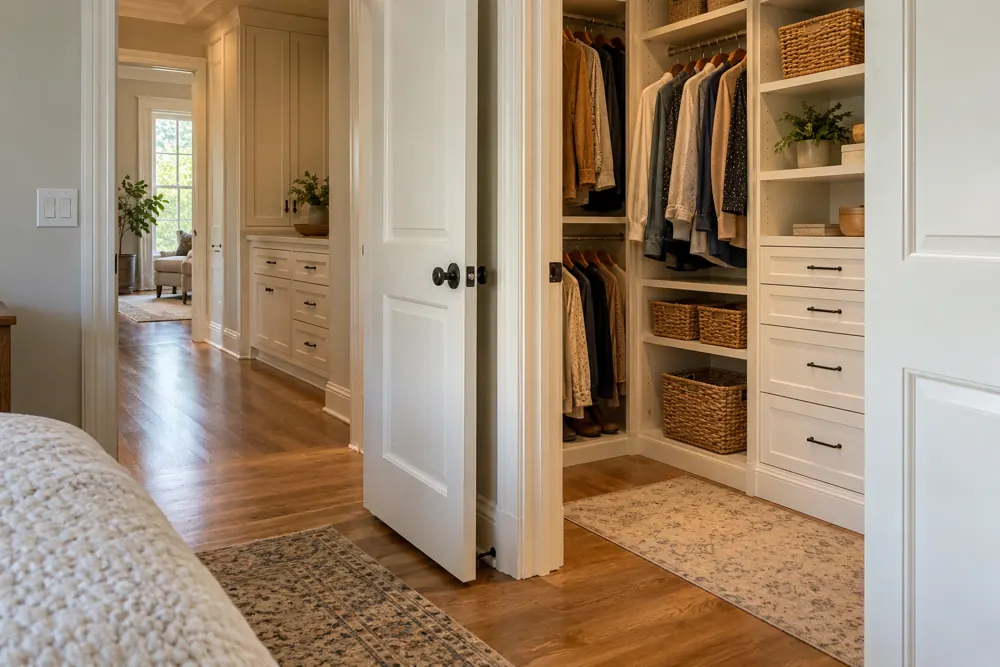
Storage decisions can affect neighboring spaces. Moving seasonal coats into a bedroom closet may free an entryway but crowd the wardrobe. Bringing office files into a new cabinet may release a guest room surface. Consider those connections before deciding the order of the work.
Create a simple list of what will move into and out of each planned space. If a later phase depends on the first, make that relationship clear during design. This can help avoid building a cabinet around belongings that are expected to leave as soon as another room is completed.
Keep budget and design choices coordinated
A phased approach gives you a way to separate essential improvements from optional features, but each phase still needs its own scope and proposal. For closet planning, FG Home and Closets offers simple systems starting at $3,500, with more extensive feature-rich designs reaching $20,000 or more. Other rooms require their own project-specific discussion.
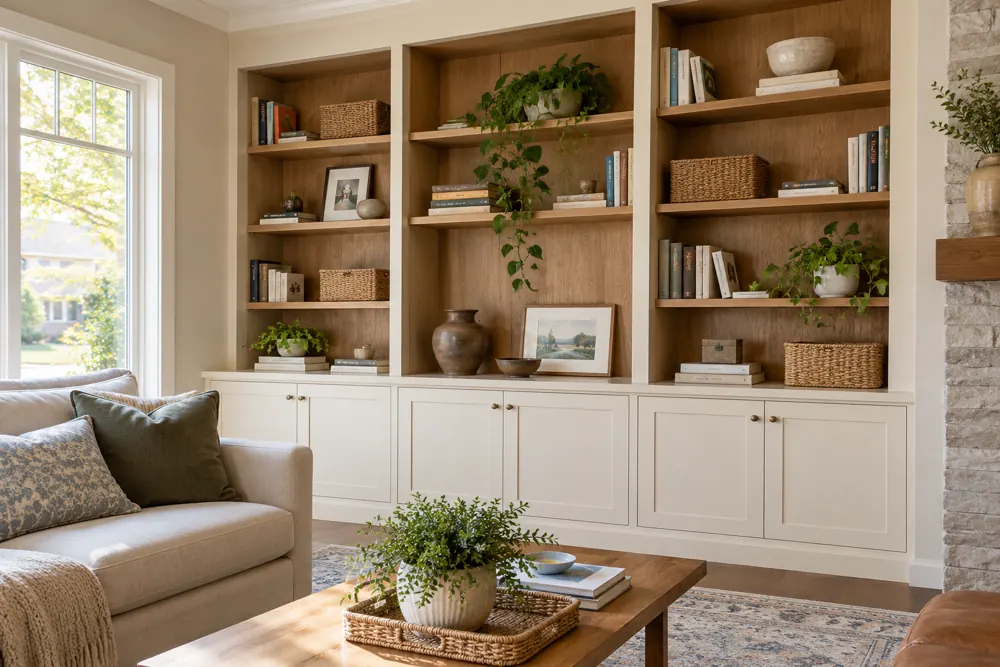
Think about which finishes and details should connect across the home. Matching every room exactly is not always necessary, but a consistent direction can help later decisions feel intentional. Confirm available selections, timing and installation requirements when each phase is planned rather than assuming that earlier conditions remain unchanged.
Use a short priority list
The best sequence is the one your household can understand and use. A completed first phase should make daily life easier while giving the next phase a clearer purpose.
- Rank rooms by the frequency of the problem.
- List belongings that will move between spaces.
- Separate essential work from optional features.
- Confirm the scope, pricing and schedule for each phase before committing.
Make it work in your home.
FG Home and Closets designs and installs storage from Aurora, Illinois. Share your room, priorities and ZIP code to start a free design consultation.
Explore custom closets Explore pantries Explore home offices