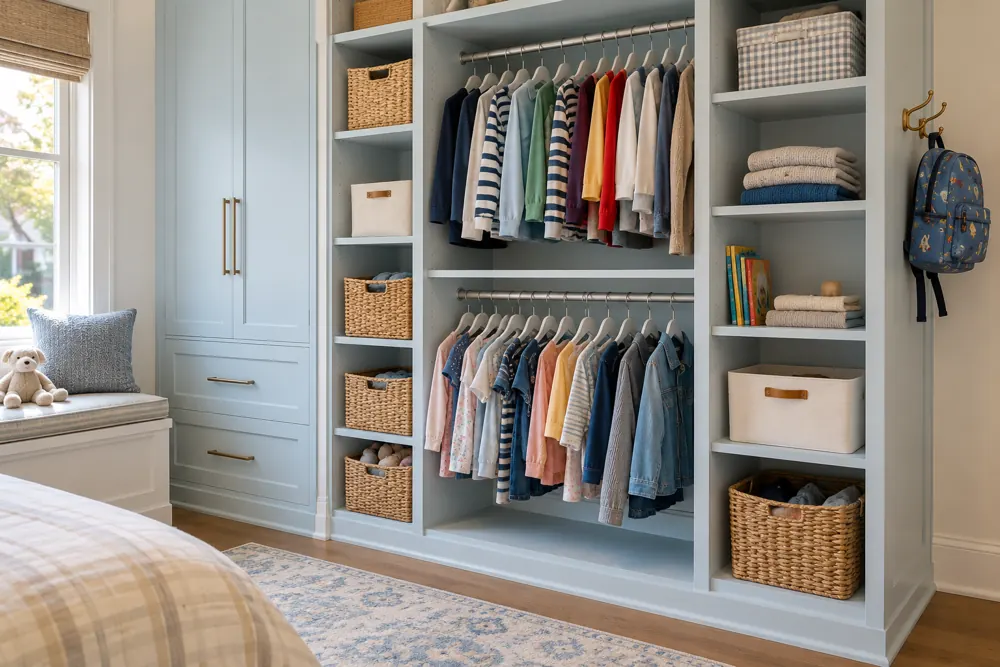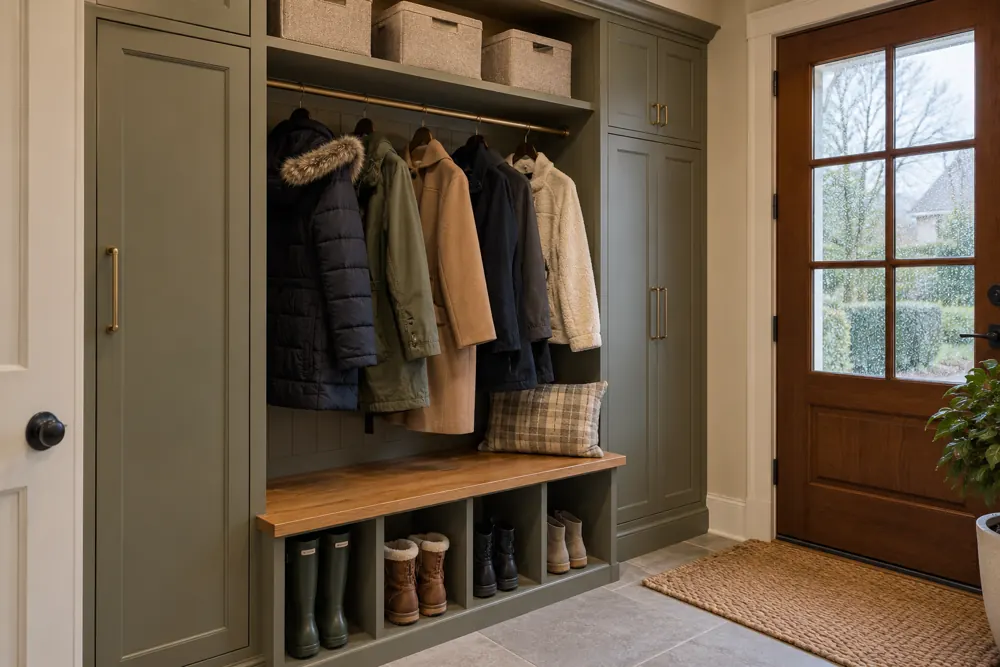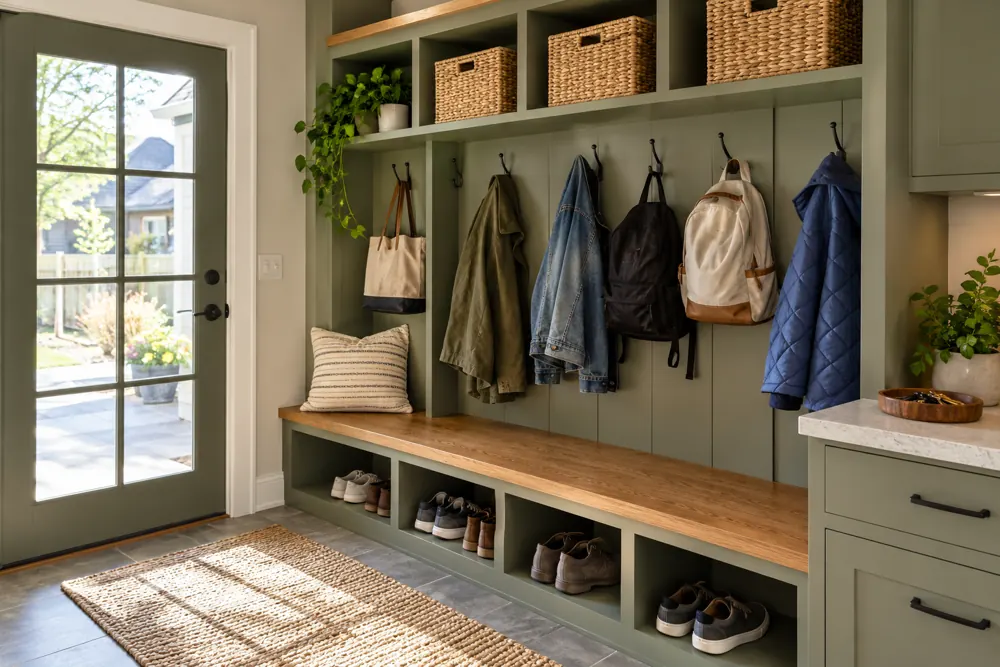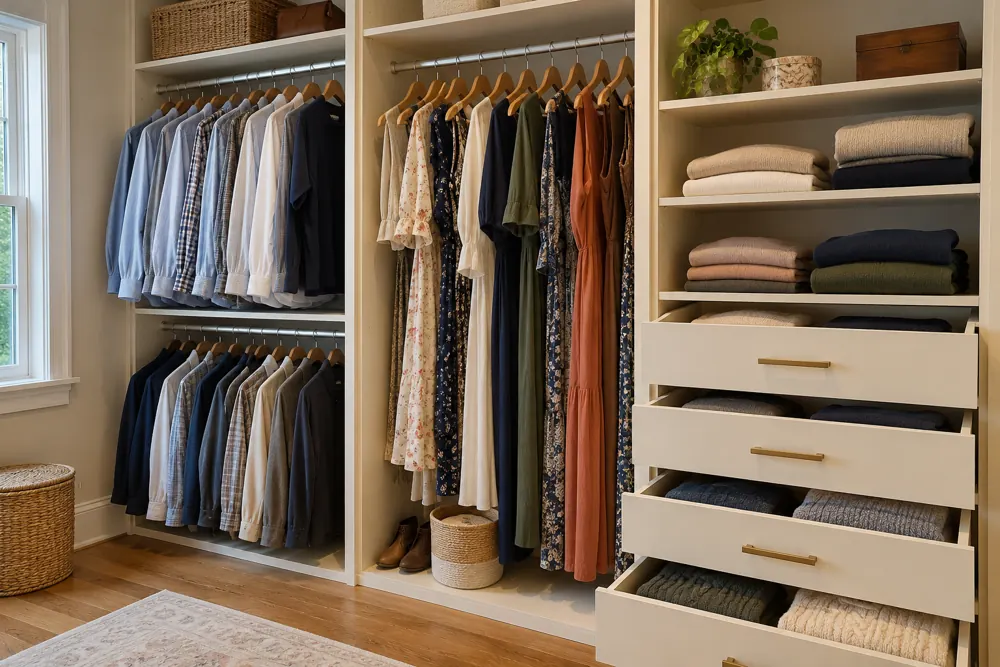
Storage is easier to use when frequently needed items sit within a reach that feels comfortable to the person using it. Start with real tasks and a simple trial rather than assuming everyone uses the same shelf or hanging height.
Choose the tasks you want to make easier
Think about the moment that causes difficulty. It may be lifting a full hamper, finding clothes on a high rail or reaching behind a deep stack of towels. Describe the task rather than asking only for a lower shelf or a different handle.
A lower location can still be awkward if you have to bend, twist or reach past a door. A shallow drawer can help some tasks, while a visible open shelf suits others. Work through the activities you repeat most often so the plan reflects your own preferences and comfort.
Try a temporary arrangement
Use an existing surface or a sturdy shelf to test the height you have in mind. Place a few representative items there and retrieve them in your usual way. Try the same task while carrying a basket or wearing the clothing you normally have on when getting ready.
Ask another household member to observe the movement if helpful. Note where you have to stretch, change your grip or set something down unexpectedly. This is a planning exercise, not a formal accessibility assessment. Any specific accessibility or medical requirements should be discussed with an appropriately qualified professional.
Keep the load in the conversation
An empty container is easy to reach even when the same container full of linens is uncomfortable to move. Test with a representative load where you can do so safely. Smaller groups may be easier to manage than one large stack or oversized basket.
Tell the designer which items are heavy for you. Their location, the available hand space and the motion needed to lift them should inform the layout. Confirm the load rating of the proposed shelf or drawer hardware for what you intend to store.
If more than one person uses the storage, test the proposed locations with each person. A shared everyday item may need a mutually comfortable place, while personal items can occupy separate sections. Keep the consultation focused on those specific tasks so a compromise for one shelf does not dictate the entire room.
- Identify items used every day.
- Separate bulky items from small frequently handled pieces.
- Describe any grip or lifting preferences before choosing hardware.
Test the opening and the handle together
A handle that is comfortable on a sample can feel different when placed close to another cabinet or behind a closet door. Think about where your hand approaches it and where you stand while the door or drawer moves.
Cabinet interiors should remain visible as well as reachable. A deep shelf can hide items even at a comfortable height. Ask whether a shallower compartment, a divided section or a different opening direction would make the task simpler. Include available light in the discussion without assuming that extra lighting alone fixes the access problem.
Check how an item returns to its place
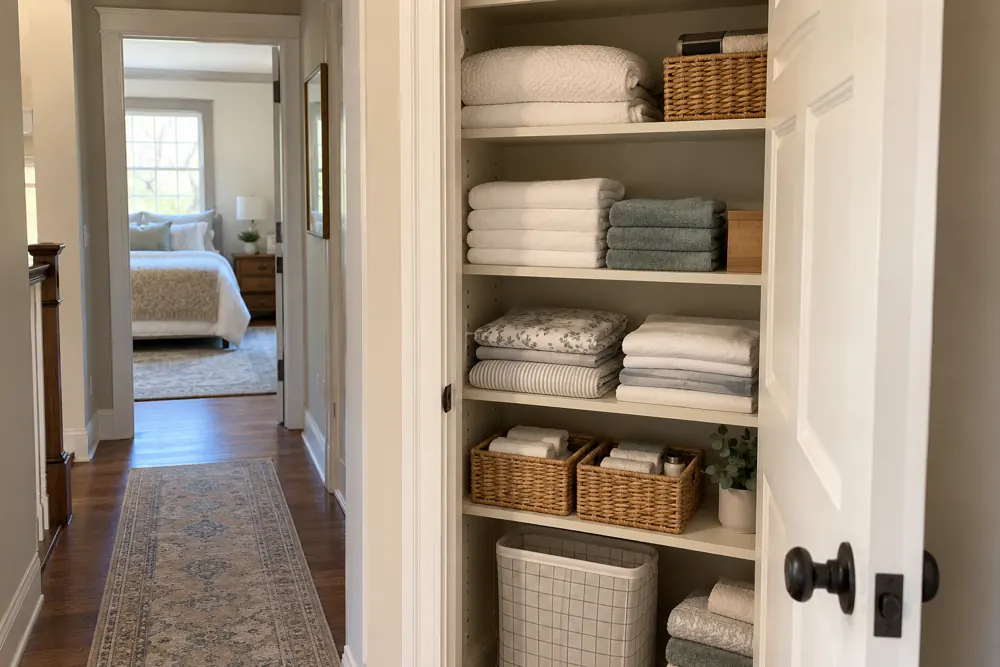
Retrieving an item is only half the movement. Try putting it back while holding the neighboring pieces that normally share the section. If that requires a different or more awkward reach, consider a smaller group or another location. A comfortable return position makes the layout easier to maintain without relying on another person to reset it.
Make the preferred setup easy to maintain
Keep the most frequently used items in their agreed positions and reserve less convenient areas for things another person can help retrieve if that suits your household. Labeling, grouped containers and a clear return location can prevent the original arrangement from drifting.
During the consultation, demonstrate one task you want to improve. Bring the object or its measurements and explain the movement that feels uncomfortable. FG can work through layout options with you and discuss the space, doors and selected components. The aim is a storage plan that makes your daily routine more comfortable on your own terms, with the final arrangement reviewed around your individual needs.
Keep planning
Discuss this layout for your home.
Show FG a daily storage task you want to make easier, along with the items and the reach heights you prefer.
FG Home and Closets designs and installs storage throughout Chicagoland from its Aurora base. Share your room, priorities and ZIP code to start a free design consultation.
Explore custom closets Explore linen & hall closets