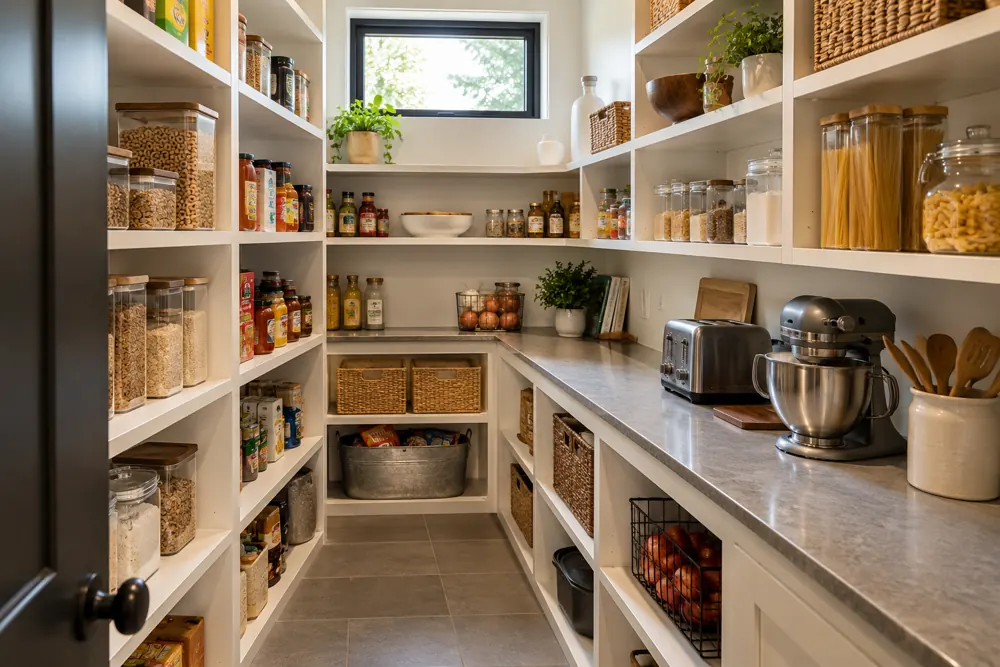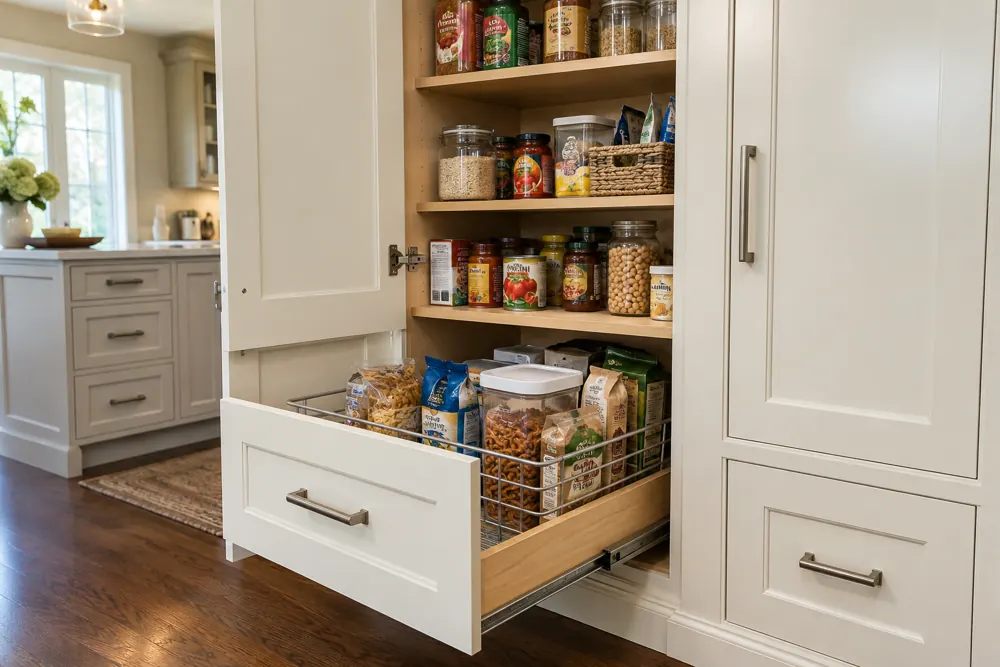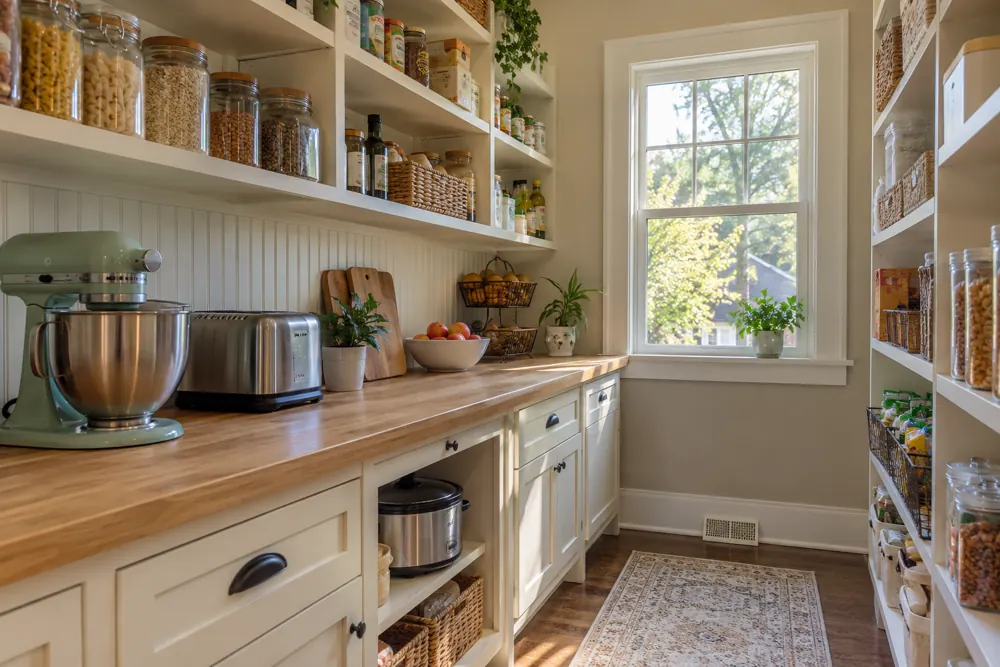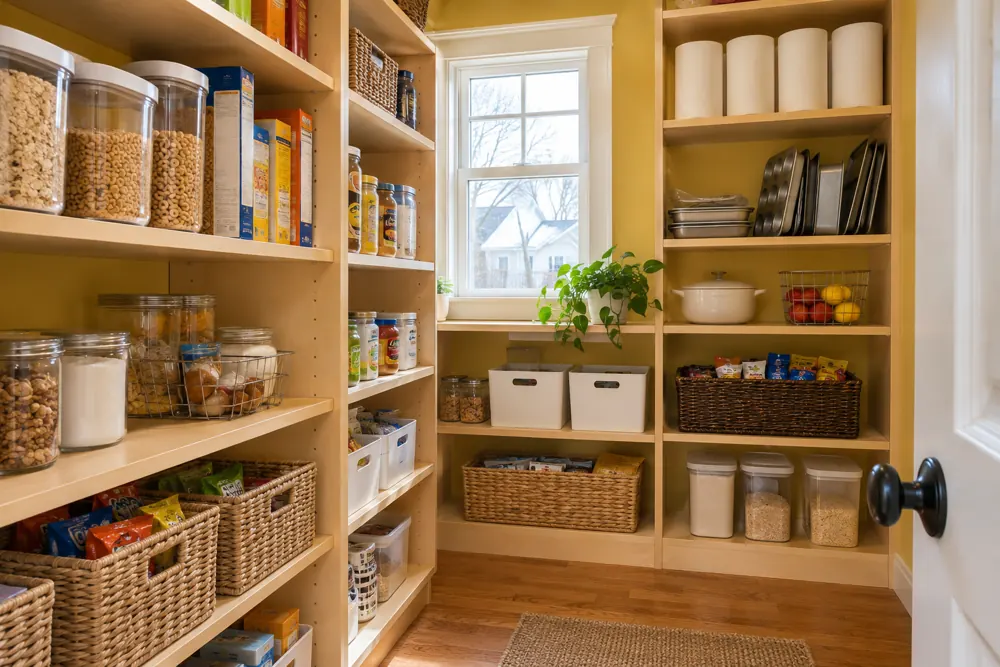
Use routines to name the zones
A useful pantry zone is a group of items that people reach for together. Breakfast, school snacks, baking and everyday cooking are practical examples. The right categories come from your household, not from a requirement to make every shelf look different.
Keep the system simple enough to use when you are tired or unloading groceries quickly. If each item has an overly specific destination, the pantry can become harder to maintain than the old shelves. Broad, obvious categories usually provide a better starting point, with smaller divisions added only where they help.
Put frequent-use zones where they are easy to reach
The most convenient storage should serve the people and tasks that use it most often. A breakfast shelf may need to be easy for several household members to understand. A baking section can keep ingredients and related equipment together instead of scattering them across the room.
Consider adult-managed items separately from categories that children may retrieve themselves. The layout should reflect your household’s choices about access. Discuss these preferences during design so a seemingly convenient lower shelf is not assigned to the wrong group of belongings.
Give bulk purchases a defined limit
Extra supplies can be useful, but they should not gradually occupy every empty shelf. Assign a recognizable area for unopened backup items and distinguish it from the groceries currently in use. That makes it easier to notice what is already available before buying more.
Leave a practical landing area for the shopping patterns you actually have. Some households buy small amounts frequently; others bring home larger packages. Neither routine is inherently better, but each asks something different of the shelving. Plan around a normal grocery delivery or shopping trip rather than the pantry’s tidiest day.
A quick look through those zones before shopping can also reveal duplicates that would otherwise take up the newly organized space.
Try a simple weekly check
A zone system should make small resets easier. You should be able to see whether a category is full, running low or drifting into a neighboring area without emptying the whole pantry.
- Choose a few clear zones based on real meals and routines.
- Keep opened items distinct from backup supplies.
- Assign bulky or tall packages before choosing shelf spacing.
- Review what is difficult to put away and adjust the layout or categories.
Make it work in your home.
FG Home and Closets designs and installs storage from Aurora, Illinois. Share your room, priorities and ZIP code to start a free design consultation.
Explore pantries Explore mudrooms & entryways