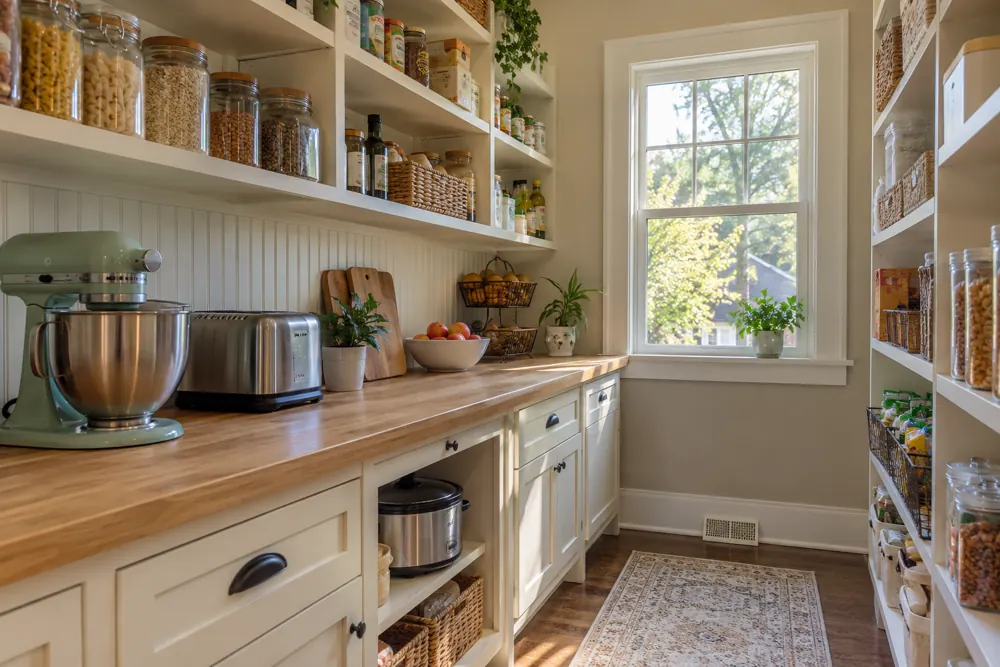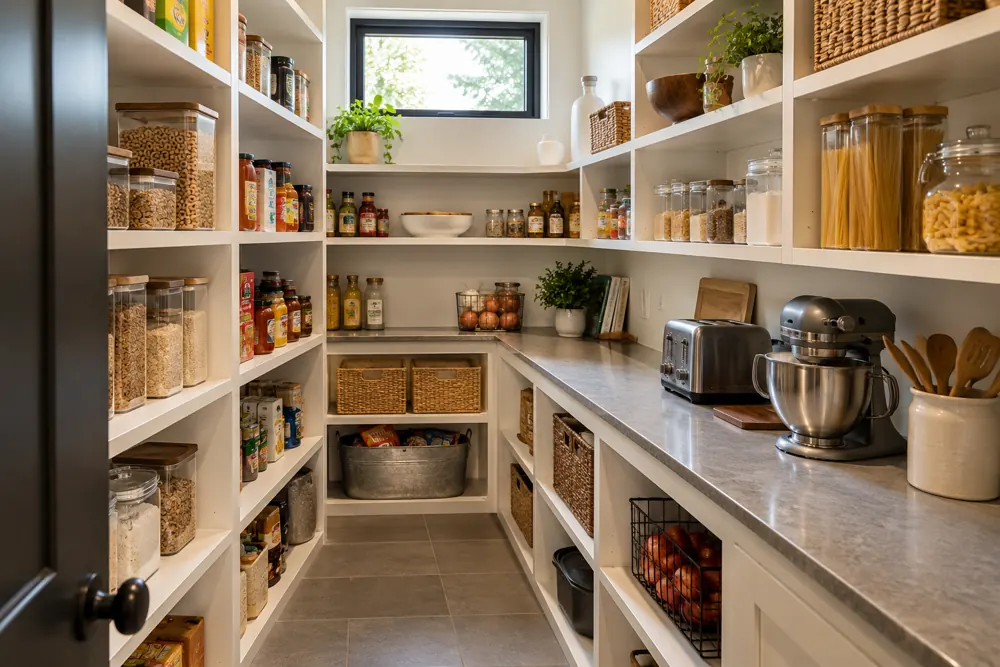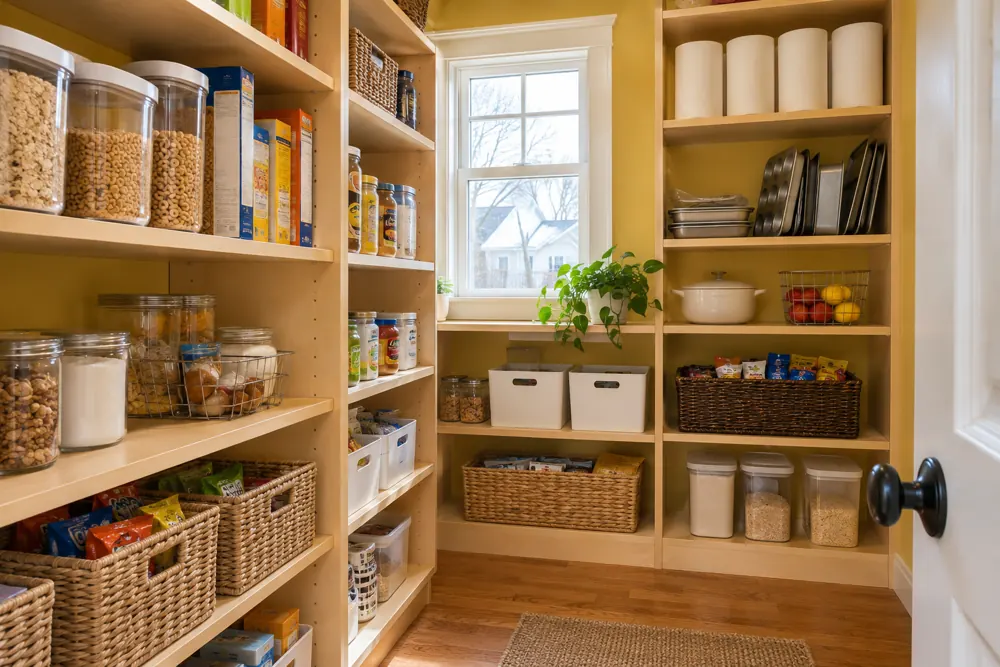
Give serving pieces a separate pantry zone based on how often you use them and how they must be lifted. Keep daily groceries in the easiest reach, and size occasional storage around your largest platter, not a standard dinner plate.
Sort by occasion before choosing a cabinet
A serving bowl used every Sunday deserves a different location from a holiday punch bowl. Group the collection by frequency, then by the way it needs to be handled. Large does not always mean occasional, and small does not always mean everyday.
List the pieces you want within easy reach when guests arrive. Include napkins, table linens, candles and reusable party supplies if they currently share the pantry. You may find that one coherent serving section is more useful than spreading these items across several rooms.
Measure the shape, not just the footprint
A platter’s width may fit a shelf while its raised handles catch the cabinet opening. A tall pedestal can require more space than the bowl it supports. Measure the complete object and note whether it must be tilted to move through the door.
Use those measurements when comparing a shelf, drawer or vertical divider. Ask how you would grip the piece and bring it forward. Something fragile should not require balancing another object while it is being removed. The cabinet opening and hand space are as important as the interior dimensions.
Keep stacks manageable
Nesting bowls saves room until the bowl you need is at the bottom. Divide stacks according to weight and use, keeping the pieces you reach for most often on top or in a separate group. Follow the manufacturer’s care advice for stacking and protective materials.
Wide shallow drawers may suit certain serving pieces, but the loaded weight and chosen hardware need to be discussed. A shelf can work well when you can see each piece and lift it without overreaching. Avoid choosing a drawer simply because it looks tidier in a photograph.
For linens and smaller party items, sort by complete setting rather than by every individual object. One manageable group for a particular table can make preparation easier. Keep an inventory with the group so you can check what has been returned without unpacking every napkin or opening several boxes after an event.
- Count the pieces in a typical stack.
- Check the grip and lifting motion for the heaviest item.
- Keep fragile rims away from frequently moved bulk packages.
Protect the grocery route
Party supplies should not block the ingredients used on an ordinary weekday. If you store serving pieces above groceries, think about whether lifting them could knock food containers from the shelf below. An adjacent cabinet or a separate pantry bay may be easier to use.
Leave a place to stage a platter while you gather the rest of the setting. It might be an existing kitchen counter rather than a new pantry surface. Trace the route to the dining table so the storage supports carrying, arranging and returning pieces after washing.
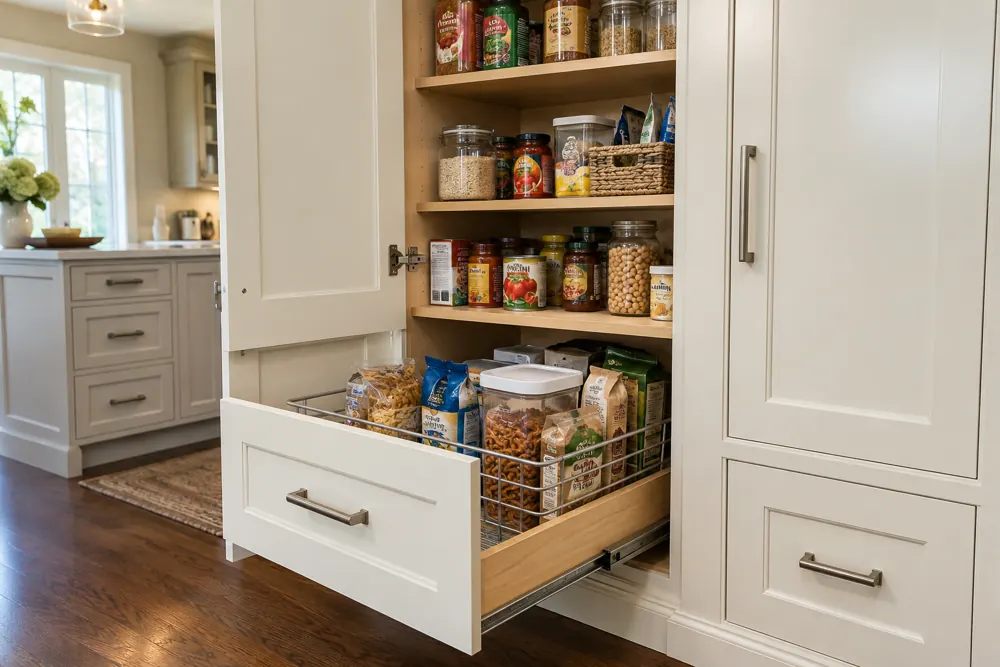
Use the door view to check visibility
Open the cabinet and look at the collection from the place you would normally stand. You should be able to identify a platter without removing several unrelated items first. A written list inside the door can help with occasional pieces, but it should supplement a usable arrangement rather than compensate for an inaccessible stack.
Plan for the return after a gathering
The storage needs to work when you are putting things away, too. Pieces may return to the pantry at different times as they are washed and dried. Keep each category’s location clear enough that the last clean bowl has an obvious place to go.
Before buying extra organizers, arrange a temporary serving zone on existing shelves. Try retrieving the full setting for a meal and returning it. Note the one or two difficult movements, such as lifting a deep stack or turning a long platter through a narrow door. Bring those observations to the design conversation. A useful pantry plan solves these movements while preserving the everyday grocery space you already need.
Keep planning
Discuss this layout for your home.
Share photos of your largest serving pieces and the pantry opening so FG can discuss practical cabinet and shelf options.
FG Home and Closets designs and installs storage throughout Chicagoland from its Aurora base. Share your room, priorities and ZIP code to start a free design consultation.
Explore pantries